Natural Language Processing with Python: A Complete Beginner Guide
Learn Natural Language Processing (NLP) using Python. This beginner guide explains NLP concepts, Python libraries like NLTK and spaCy, and how developers build intelligent language-processing systems.

Every day, humans generate massive amounts of text data through emails, social media posts, online reviews, and messages. Understanding this data manually would be impossible at scale.
This is where Natural Language Processing (NLP) comes in.
Natural Language Processing is a branch of Artificial Intelligence that enables computers to understand, analyze, and generate human language.
From chatbots and translation systems to spam detection and voice assistants, NLP plays a critical role in many modern technologies. And once again, Python is the most popular programming language used for NLP development.
In this guide, we will explore how NLP works and how developers can start building language-processing systems using Python.
What is Natural Language Processing?
Natural Language Processing focuses on enabling computers to understand human language in both written and spoken form.
Computers process text differently than humans. NLP helps convert human language into structured data that machines can analyze.
For example, NLP systems can:
-
Identify sentiment in text (positive or negative)
-
Translate languages
-
Detect spam messages
-
Extract important keywords
-
Answer questions automatically
Many technologies we use every day rely heavily on NLP.
Popular Python Libraries for NLP
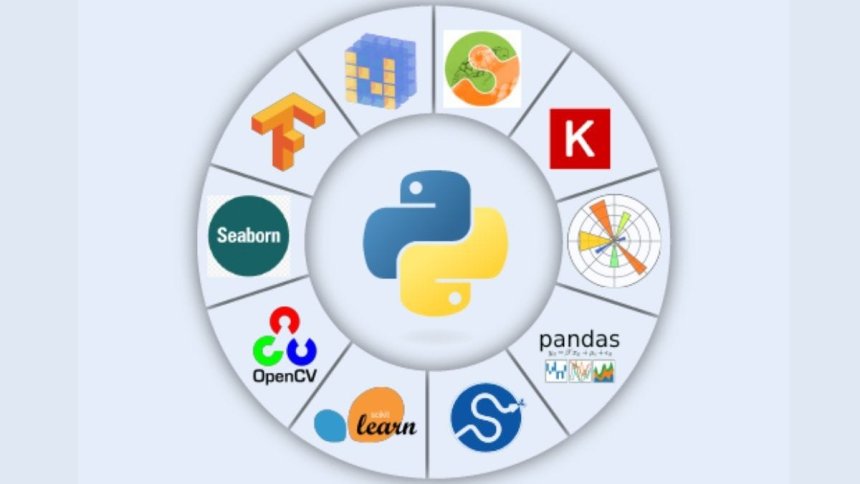
Python provides several powerful libraries designed specifically for natural language processing.
NLTK
The Natural Language Toolkit (NLTK) is one of the oldest and most popular NLP libraries. It provides tools for text processing, tokenization, and language analysis.
spaCy
spaCy is a modern NLP library designed for production systems. It is fast, efficient, and widely used for real-world applications.
TextBlob
TextBlob simplifies NLP tasks such as sentiment analysis and text classification.
Transformers
The Transformers library by Hugging Face allows developers to use powerful deep learning models for advanced language understanding.
Installing NLP Libraries
To begin working with NLP in Python, install the required packages using pip.
After installing these libraries, developers can start experimenting with text processing and language analysis.
Example: Sentiment Analysis in Python
Sentiment analysis is one of the most common NLP tasks. It determines whether a piece of text expresses positive, negative, or neutral sentiment.
Below is a simple Python example using TextBlob.
text = "Python is an amazing programming language for AI."
analysis = TextBlob(text)
print("Sentiment:", analysis.sentiment)
This program analyzes the sentiment of the text and returns values indicating polarity and subjectivity.
Real Applications of NLP
Natural Language Processing powers many modern technologies.
Some popular applications include:
Voice assistants like Siri and Alexa
AI chatbots for customer support
Language translation systems
Email spam filtering
Text summarization tools
Search engine query understanding
Companies like Google, Microsoft, and Amazon use advanced NLP systems to process billions of text interactions every day.
Tips for Learning NLP with Python
If you want to become proficient in NLP development, it’s important to combine theoretical knowledge with practical projects.
Good beginner NLP projects include:
Spam email detection system
Sentiment analysis for product reviews
AI chatbot with language understanding
News article summarization tool
Working with real datasets and experimenting with different NLP models will help you gain deeper insights into language processing.
Conclusion
Natural Language Processing is one of the most impactful areas of Artificial Intelligence today. It allows machines to understand human language and interact with users in more natural ways.
Python has made NLP development much easier by providing powerful libraries and frameworks that simplify complex language-processing tasks.
By learning the fundamentals of NLP and building small projects, developers can gradually move toward advanced AI applications such as chatbots, voice assistants, and intelligent text analysis systems.
Python continues to be one of the best tools for exploring the fascinating world of Natural Language Processing.
Share
What's Your Reaction?
 Like
0
Like
0
 Dislike
0
Dislike
0
 Love
0
Love
0
 Funny
0
Funny
0
 Angry
0
Angry
0
 Sad
0
Sad
0
 Wow
0
Wow
0