Build a Recommendation System Using Python (Like Netflix & Amazon)
Learn how to build a recommendation system using Python like Netflix and Amazon. This guide explains collaborative filtering, Python libraries, and creating personalized AI recommendations.

Have you ever wondered how platforms like Netflix or Amazon always seem to know what you want next?
Whether it’s movies, products, or songs, these platforms use recommendation systems powered by Artificial Intelligence to personalize user experience.
Recommendation systems analyze user behavior and suggest items based on patterns, preferences, and similarities. And the good news is — you can build one using Python.
In this guide, we’ll break down how recommendation systems work and how developers can build a simple version using Python.
What is a Recommendation System?
A recommendation system is an AI-based algorithm that suggests relevant items to users.
These systems are widely used in:
- E-commerce (Amazon product suggestions)
- Streaming platforms (Netflix, Spotify)
- Social media feeds
- Online learning platforms
The goal is simple: increase user engagement by showing personalized content.
Types of Recommendation Systems
There are mainly two types of recommendation systems.
Content-Based Filtering
This method recommends items similar to what the user has liked in the past.
For example, if a user watches action movies, the system suggests more action movies.
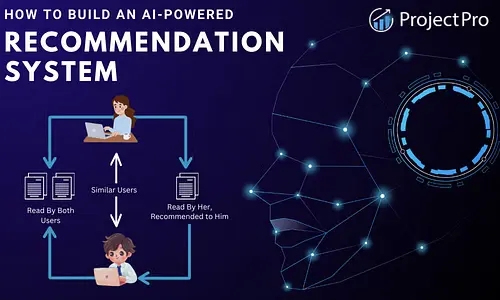
Collaborative Filtering
This method recommends items based on user similarity.
For example, if two users have similar preferences, the system suggests items liked by one user to the other.
This is the method used by most large platforms.
Python Libraries for Recommendation Systems
To build a recommendation engine, developers typically use:
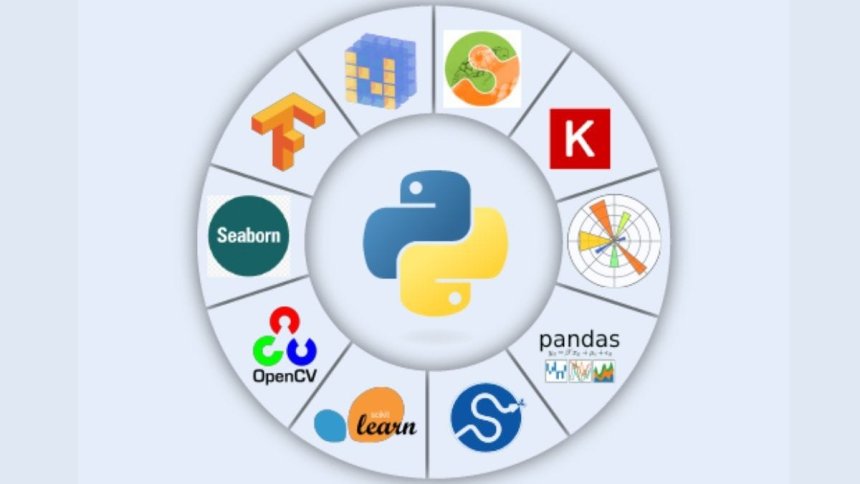
- NumPy (for numerical operations)
- Pandas (for data handling)
- Scikit-learn (for similarity calculations)
These libraries help process user data and generate recommendations efficiently.
Installing Required Libraries
Install the required libraries using pip:
Building a Simple Recommendation System
Let’s create a basic movie recommendation system using similarity scores.
from sklearn.metrics.pairwise import cosine_similarity
# Sample dataset
data = {
'Movie1': [5, 4, 0, 0],
'Movie2': [4, 0, 0, 2],
'Movie3': [0, 0, 5, 4],
'Movie4': [0, 3, 4, 5]
}
df = pd.DataFrame(data)
# Calculate similarity
similarity = cosine_similarity(df)
print(similarity)
This code calculates similarity between users based on their preferences.
From this similarity matrix, the system can recommend items liked by similar users.
Improving the Recommendation System
A basic recommendation system works, but real-world systems are much more advanced.
Developers can improve it by:
- Using larger datasets
- Adding user behavior tracking
- Implementing deep learning models
- Using matrix factorization techniques
- Integrating real-time recommendations
These enhancements make recommendations more accurate and personalized.
Real-World Applications
Recommendation systems are used everywhere today.
Some examples include:
Netflix suggesting movies and shows
Amazon recommending products
Spotify suggesting songs
YouTube recommending videos
E-commerce apps showing related items
These systems significantly increase user engagement and business revenue.
Challenges in Recommendation Systems
Building recommendation systems also comes with challenges.
Some common challenges include:
Cold start problem (new users with no data)
Data sparsity
Scalability for large datasets
Maintaining recommendation accuracy
Solving these challenges requires more advanced machine learning techniques.
Tips for Developers
If you want to master recommendation systems, focus on practical implementation.
Start with small datasets and simple models, then gradually explore advanced techniques.
Try building:
- Movie recommendation system
- Product recommendation engine
- Music recommendation app
These projects are highly valuable for both learning and portfolio building.
Conclusion
Recommendation systems are one of the most impactful applications of Artificial Intelligence. They power some of the biggest platforms in the world and play a key role in improving user experience.
With Python and libraries like Pandas and Scikit-learn, developers can build their own recommendation engines and understand how personalization works behind the scenes.
By starting simple and gradually adding complexity, you can create intelligent systems that deliver real value to users.
Share
What's Your Reaction?
 Like
0
Like
0
 Dislike
0
Dislike
0
 Love
0
Love
0
 Funny
0
Funny
0
 Angry
0
Angry
0
 Sad
0
Sad
0
 Wow
0
Wow
0