Getting Started with Artificial Intelligence Using Python
Learn how to start Artificial Intelligence development using Python. This beginner-friendly guide explains Python AI libraries, tools, and how developers build their first machine learning model.


Artificial Intelligence is rapidly becoming one of the most exciting areas in modern software development. From recommendation systems and chatbots to self-driving cars and medical diagnosis tools, AI is transforming the way applications work.
For developers who want to enter this field, Python has become the most popular programming language for Artificial Intelligence.
Its simplicity, large ecosystem, and powerful libraries make it ideal for building intelligent systems without writing extremely complex code.
In this guide, we will explore how developers can start working with AI using Python and understand the basic workflow behind machine learning systems.
Why Python is the Best Language for AI
Python has gained massive popularity in the AI community because it focuses on readability and simplicity.
Unlike many other programming languages, Python allows developers to implement complex algorithms with very little code. This makes experimentation faster and development more efficient.
Another important reason is the availability of powerful open-source libraries. These libraries provide ready-to-use machine learning tools that would otherwise require thousands of lines of code.
Because of these advantages, most AI research and development projects today use Python.
Popular Python Libraries for Artificial Intelligence
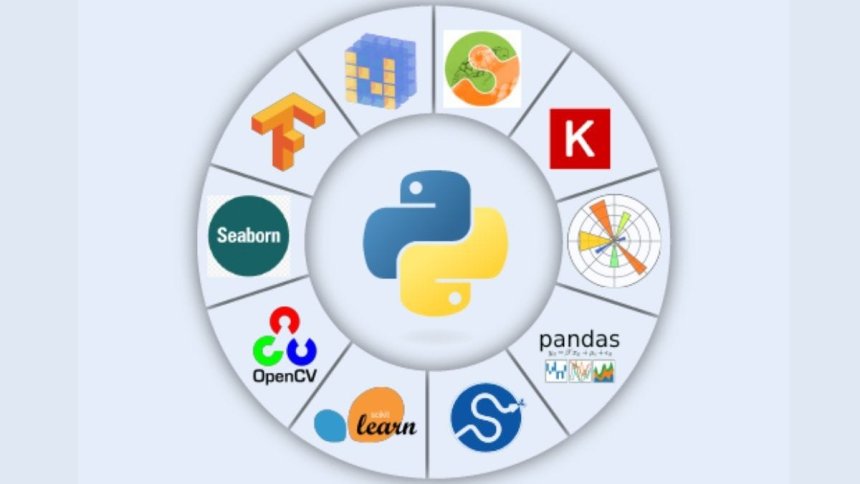
To build AI applications in Python, developers usually rely on several specialized libraries.
NumPy
NumPy is used for performing high-speed mathematical operations and handling large arrays of numerical data. It is one of the most fundamental libraries in the AI ecosystem.
Pandas
Pandas helps developers manage and analyze datasets easily. Since machine learning models depend heavily on data, Pandas becomes a critical tool for cleaning and organizing data.
Scikit-learn
Scikit-learn is one of the easiest machine learning libraries for beginners. It includes tools for classification, regression, clustering, and predictive modeling.
TensorFlow
TensorFlow is a deep learning framework developed by Google. It allows developers to build neural networks and large-scale AI systems.
PyTorch
PyTorch is another widely used deep learning framework known for its flexibility and popularity in AI research.
Installing AI Libraries in Python
Before starting any AI project, you must install the necessary libraries.
You can install them using pip:
Once installed, you are ready to begin experimenting with machine learning models.
Creating Your First AI Model in Python
Let’s create a simple machine learning model that predicts values based on training data.
import numpy as np
# Training dataset
x = np.array([[1], [2], [3], [4], [5]])
y = np.array([2, 4, 6, 8, 10])
# Create model
model = LinearRegression()
# Train model
model.fit(x, y)
# Predict value
prediction = model.predict([[6]])
print("Prediction:", prediction)
In this example, the model learns a pattern from the training data and predicts the next value.
Although this example is very simple, it demonstrates how machine learning models learn from data.
Real Applications of Python AI
Artificial Intelligence powered by Python is used across many industries.
Some popular applications include:
-
AI chatbots and virtual assistants
-
Image recognition systems
-
Fraud detection in banking
-
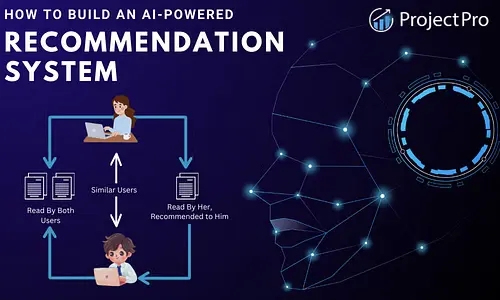
Recommendation engines used by streaming platforms
-
Voice recognition systems
-
Natural language processing tools
Large technology companies such as Google, Amazon, and Netflix rely heavily on these AI technologies.
Tips for Beginners Learning AI
Starting with Artificial Intelligence can feel overwhelming, but the best way to learn is through small practical projects.
Beginners should focus on understanding:
-
Basic machine learning concepts
-
Data preprocessing techniques
-
Model training and evaluation
-
Working with real datasets
Practicing with small projects like prediction models, spam classifiers, or recommendation systems will help build strong AI development skills.
Conclusion
Artificial Intelligence is one of the most promising areas in software development, and Python has become the go-to language for building AI solutions.
With powerful libraries and a supportive developer community, Python allows even beginners to experiment with machine learning and intelligent systems.
By starting with simple models and gradually exploring advanced frameworks like TensorFlow and PyTorch, developers can build powerful AI applications that solve real-world problems.
The journey into AI may seem complex at first, but with Python, it becomes much more accessible.
Share
What's Your Reaction?
 Like
0
Like
0
 Dislike
0
Dislike
0
 Love
0
Love
0
 Funny
0
Funny
0
 Angry
0
Angry
0
 Sad
0
Sad
0
 Wow
0
Wow
0