Build an Image Recognition AI Model Using Python
Learn how to build an image recognition AI model using Python. This beginner-friendly guide explains computer vision, Python libraries, and how developers create image classification systems.

Artificial Intelligence has made computers capable of understanding images in ways that were once only possible for humans. From facial recognition in smartphones to object detection in self-driving cars, image recognition has become one of the most exciting applications of AI.
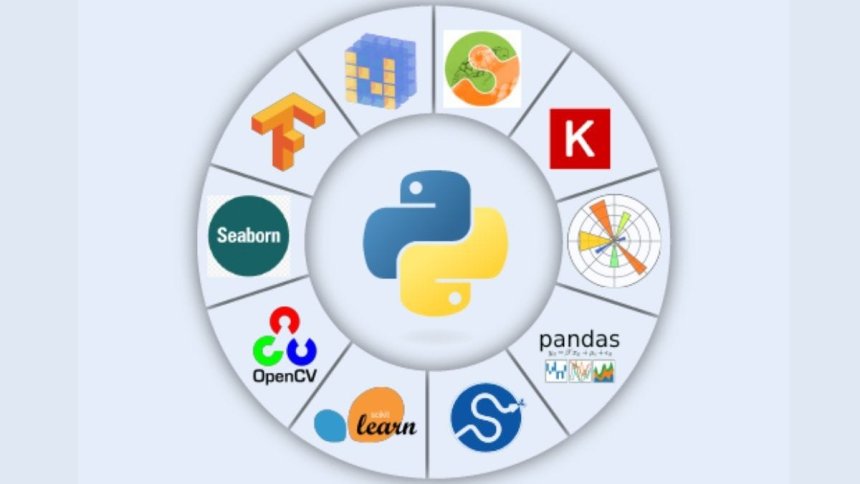
Python has played a major role in making computer vision technology accessible to developers. With powerful libraries like TensorFlow, OpenCV, and PyTorch, developers can build intelligent image recognition systems with relatively simple code.
In this guide, we will explore how image recognition works and how developers can build their first AI image recognition model using Python.
What is Image Recognition?
Image recognition is a branch of Artificial Intelligence that allows computers to identify objects, people, places, or patterns inside images.
For example, an AI system can analyze an image and determine whether it contains:
-
A dog or a cat
-
A human face
-
A car or a building
-
Text inside an image
This technology is widely used in applications such as facial recognition systems, security surveillance, medical image analysis, and autonomous vehicles.
Popular Python Libraries for Image Recognition
Several Python libraries make it easier to build image recognition systems.
OpenCV
OpenCV is one of the most widely used computer vision libraries. It helps process images, detect objects, and analyze visual data.
TensorFlow
TensorFlow allows developers to build deep learning models capable of recognizing patterns in images.
Keras
Keras simplifies the process of building neural networks and is commonly used with TensorFlow.
PyTorch
PyTorch is widely used in research and production AI systems for image processing and deep learning.
Installing Required Libraries
Before starting the project, install the required libraries using pip.
These libraries help process images and train machine learning models.
Simple Image Classification Example
Below is a simple Python example showing how an image classification model can be created using TensorFlow and Keras.
from tensorflow import keras
# Load dataset
dataset = keras.datasets.cifar10
(train_images, train_labels), (test_images, test_labels) = dataset.load_data()
# Normalize image data
train_images = train_images / 255.0
test_images = test_images / 255.0
# Create model
model = keras.Sequential([
keras.layers.Flatten(input_shape=(32,32,3)),
keras.layers.Dense(128, activation='relu'),
keras.layers.Dense(10)
])
# Compile model
model.compile(optimizer='adam',
loss=tf.keras.losses.SparseCategoricalCrossentropy(from_logits=True),
metrics=['accuracy'])
# Train model
model.fit(train_images, train_labels, epochs=5)
This model learns to classify images from the CIFAR-10 dataset into different categories.
Although this is a basic example, it demonstrates how deep learning models can analyze image data and identify patterns.
Real Applications of Image Recognition
Image recognition technology is used in many real-world applications.
Some examples include:
Facial recognition systems used in smartphones
Medical imaging analysis for disease detection
Self-driving cars detecting road objects
Security surveillance systems
Product identification in e-commerce platforms
Companies like Google, Tesla, and Amazon use similar computer vision systems in their technologies.
Tips for Learning Computer Vision
If you want to become skilled in image recognition development, focus on building practical projects.
Some good beginner projects include:
-
Face detection system
-
Object detection app
-
Image classification model
-
AI-powered photo tagging system
Working with real datasets and experimenting with neural networks will improve your understanding quickly.
Conclusion
Image recognition is one of the most powerful and exciting areas of Artificial Intelligence. Python makes it possible for developers to build computer vision systems without dealing with extremely complicated algorithms.
With libraries like TensorFlow, OpenCV, and PyTorch, developers can train AI models that recognize objects, analyze images, and automate visual tasks.
By starting with small projects and gradually exploring deep learning techniques, developers can build highly advanced AI applications in the field of computer vision.
Python continues to be one of the best tools for learning and building AI-powered image recognition systems.
Share
What's Your Reaction?
 Like
0
Like
0
 Dislike
0
Dislike
0
 Love
0
Love
0
 Funny
0
Funny
0
 Angry
0
Angry
0
 Sad
0
Sad
0
 Wow
0
Wow
0